
How Dentists Find the Real Cause Behind a Toothache
Allwyn Dental
09/05/2026
A toothache can range from a mild sensitivity to a sharp, persistent pain that makes it difficult to eat, sleep, or focus. While it may be tempting to assume that a toothache simply means you have a cavity, dental pain can have several different causes.
Dentists use a combination of your symptoms, clinical examination, dental tests, and X-rays to determine where the pain is coming from and what is actually causing it. Finding the underlying problem is important because treating only the symptom may not resolve the source of the pain.
The Location of Pain Can Be Misleading
One of the first things dentists consider is where you feel the pain. Interestingly, the tooth causing the problem is not always the tooth that appears to hurt.
Dental nerves share pathways, which can sometimes make it difficult for the brain to identify the exact source of discomfort. Pain from one tooth may feel like it is coming from another tooth, the jaw, or even a nearby area.
Your dentist will ask questions about where the pain occurs, whether it is constant or occasional, and what triggers it. These details help narrow down the possible causes.
Your Symptoms Provide Important Clues
The type of pain you experience can tell your dentist a lot about what may be happening inside or around the tooth.
For example, sensitivity to cold or hot foods may be associated with exposed dentin, decay, or irritation of the dental pulp. Pain when biting or chewing may point toward a cracked tooth, inflammation around the tooth, or another structural issue.
A toothache that lingers after exposure to hot or cold may indicate that the tissue inside the tooth is significantly irritated. On the other hand, brief sensitivity may have a different underlying cause.
Dentists consider the timing, intensity, duration, and triggers of your symptoms rather than relying on pain alone.
A Thorough Dental Examination Comes First
After discussing your symptoms, your dentist will carefully examine your teeth, gums, and surrounding tissues.
They may look for visible cavities, cracks, damaged fillings, gum inflammation, swelling, tooth wear, or other abnormalities. The dentist may also gently tap or apply pressure to certain teeth to see how they respond.
Comparing the response of the painful tooth with nearby teeth can help identify whether the problem is isolated to one area or involves surrounding structures.
Dental X-Rays Can Reveal Hidden Problems
Some causes of tooth pain cannot be seen during a visual examination. This is where dental X-rays can provide valuable information.
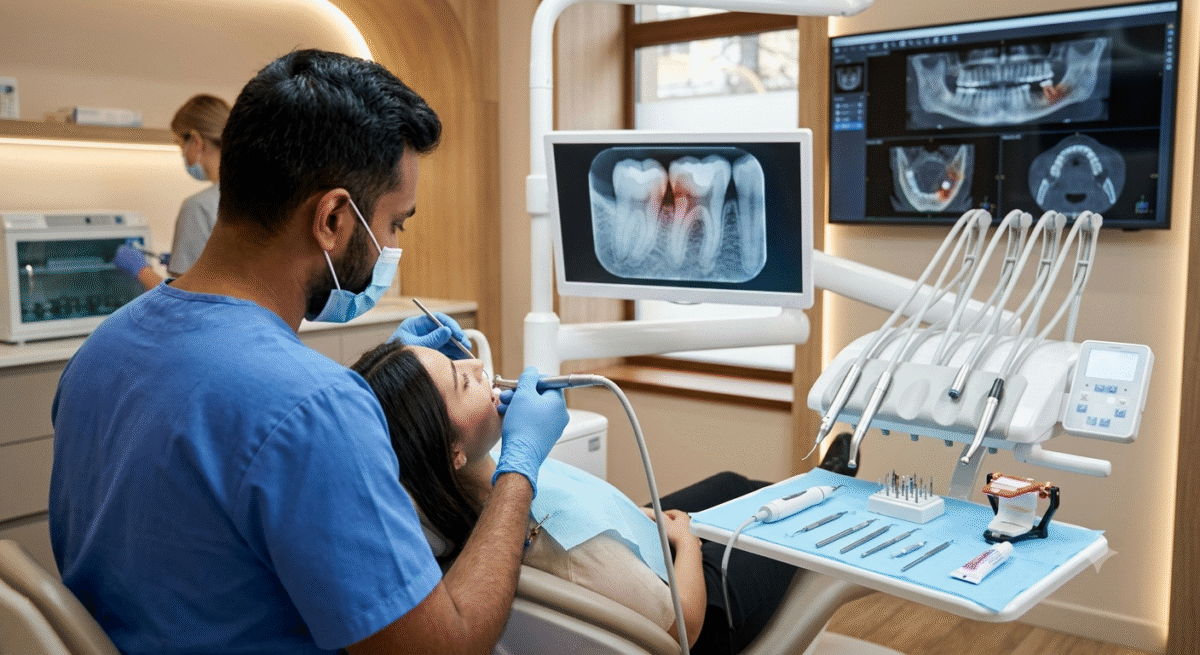
An X-ray may help reveal decay between teeth, changes around the root, bone loss, infections, or other problems hidden beneath the surface. Depending on your symptoms, your dentist may recommend a specific type of dental imaging to get a clearer view.
Imaging is not automatically needed for every toothache, but when it is appropriate, it can help your dentist understand what is happening below the visible surface.
Dentists May Test the Tooth’s Nerve
When a dentist suspects that the pulp, or nerve tissue inside the tooth, may be involved, additional tests can help evaluate its condition.
Temperature tests may be used to see how the tooth responds to hot or cold stimulation. Other tests can help determine whether the tooth responds normally compared with neighboring teeth.
These tests are particularly useful when the problem cannot be identified through a visual examination alone. The goal is to determine whether the nerve is healthy, irritated, or no longer functioning normally.
A Toothache Can Have More Than One Possible Cause
Not every toothache is caused by tooth decay. Dentists consider a range of possibilities, including:
- Tooth decay that has progressed deeper into the tooth
- Cracked or fractured teeth
- Inflamed or infected dental pulp
- Dental abscesses
- Gum disease or infection
- Worn or damaged dental restorations
- Tooth sensitivity
- Teeth grinding or clenching
- Problems involving the surrounding bone or tissues
This is why self-diagnosing a toothache can be difficult. Two people can experience similar symptoms while having completely different dental problems.
Why Finding the Cause Matters
Pain relief may temporarily make a toothache feel better, but it does not necessarily address the underlying problem.
For example, if an infection is responsible for the pain, simply managing the discomfort does not remove the source of the infection. Similarly, a cracked tooth may continue to worsen if the underlying structural problem is not addressed.
Identifying the cause allows your dentist to recommend treatment based on what the tooth actually needs rather than simply treating the symptom.
What Happens After the Diagnosis?
Once your dentist determines the likely cause of your toothache, they can discuss the appropriate treatment options with you.
Depending on the diagnosis, treatment may involve something as simple as addressing tooth decay or sensitivity. More advanced problems may require restorative treatment, treatment of the tooth’s internal tissues, management of an infection, or care for the surrounding gums and supporting structures.
The sooner the underlying cause is identified, the easier it may be to prevent the problem from progressing.
Don’t Ignore Persistent Tooth Pain
A toothache is your body’s way of signaling that something may need attention. Even if the pain comes and goes, it is worth discussing with a dental professional when it persists or returns.
At Allwyn Dental, a thorough evaluation can help identify the source of your tooth pain and determine the next appropriate step for your oral health.
Schedule a consultation at Allwyn Dental to find the real cause of your toothache and get personalized guidance for your smile.

