
Influencer Whitening Products: Dentist-Approved or Risky?
Allwyn Dental
03/21/2026
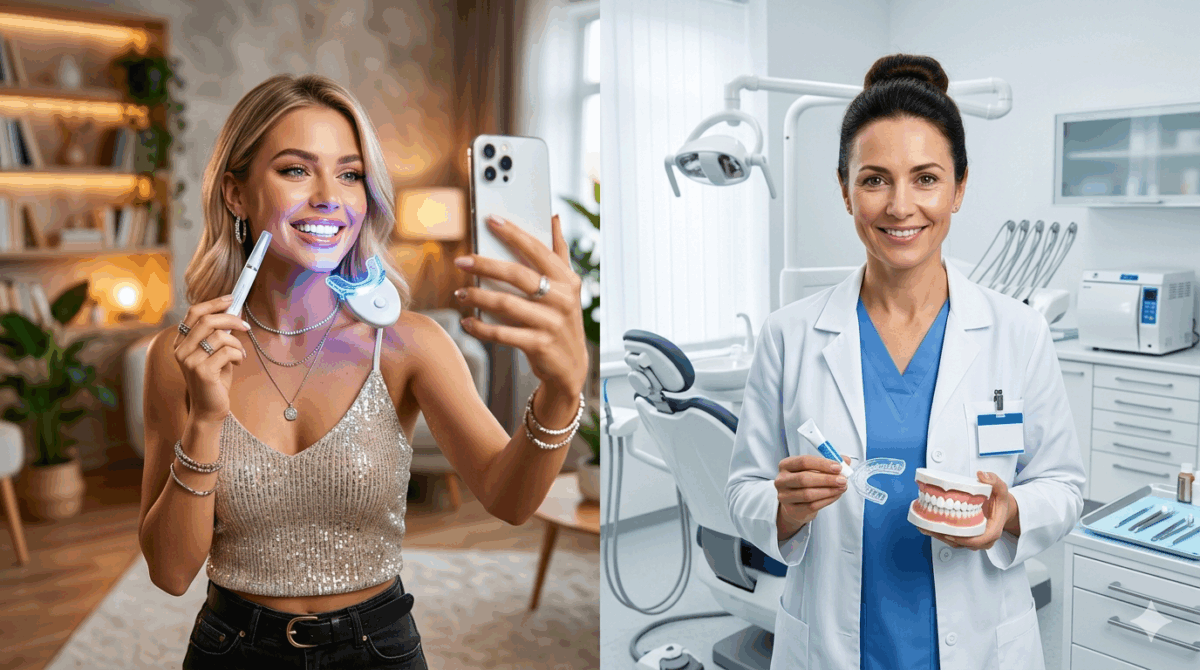
Scroll through social media, and you’ll quickly see influencers promoting “miracle” teeth whitening products—pens, powders, LED kits, strips, and even charcoal-based solutions claiming instant results.
They often promise a brighter smile in days, all from the comfort of your home.
But the big question is: Are these products actually safe and effective – or could they be putting your teeth at risk?
Let’s break down what you need to know before trying influencer-recommended whitening products.
Why Whitening Products Are So Popular
A whiter smile is often associated with:
- Confidence
- Cleanliness
- Youthfulness
Social media has amplified this demand, making teeth whitening one of the most promoted beauty trends online.
Influencers often highlight:
- Quick results
- Easy application
- Affordable pricing
While these benefits can be appealing, they don’t always tell the full story.
Are Influencer Whitening Products Dentist-Approved?
The answer is: some are, but many are not.
Dentists typically approve whitening products that contain safe, tested ingredients like hydrogen peroxide or carbamide peroxide in controlled concentrations.
However, many influencer-promoted products:
- Lack proper clinical testing
- Use unregulated ingredients
- Make exaggerated claims
- Are not tailored to individual dental needs
Just because a product is popular online doesn’t mean it’s safe for your teeth.
Common Types of Influencer Whitening Products
Whitening Strips and Pens
These are among the most common products promoted online.
They can be effective if they contain approved whitening agents—but results and safety depend heavily on the formulation.
Risks include:
- Uneven whitening
- Gum irritation
- Tooth sensitivity
LED Whitening Kits
These kits combine whitening gels with LED lights, often marketed as “professional-level” treatments at home.
While the light may enhance the process slightly, many kits rely more on marketing than science.
Effectiveness depends primarily on the whitening gel—not the light.
Charcoal-Based Products
Charcoal powders and toothpastes have become especially trendy.
They claim to “detox” and whiten teeth naturally, but dentists often caution against them.
Potential risks include:
- Enamel erosion due to abrasiveness
- Increased tooth sensitivity
- No proven long-term whitening benefits
Whitening Mouthwashes and Gels
These products are typically milder and may help maintain brightness, but they often don’t produce dramatic results on their own.
The Hidden Risks You Should Know
While some over-the-counter whitening products are safe when used correctly, influencer-promoted options can come with risks—especially when used without guidance.
Enamel Damage
Your enamel is the protective outer layer of your teeth. Once it’s damaged, it cannot regenerate.
Overuse or abrasive products can weaken enamel, leading to:
- Sensitivity
- Increased risk of cavities
- Long-term damage
Gum Irritation
Improper application of whitening gels can irritate or burn the gums, especially if the product is too strong or used incorrectly.
Tooth Sensitivity
Many whitening products can cause temporary sensitivity, but excessive or improper use can make it worse.
Uneven Results
DIY whitening products may not account for:
- Existing dental work (crowns, fillings)
- Uneven staining
- Tooth structure
This can lead to patchy or inconsistent results.
Why Professional Guidance Matters
One of the biggest differences between influencer products and dentist-recommended treatments is personalization.
A dentist evaluates:
- The cause of discoloration
- Tooth sensitivity levels
- Existing dental work
- Overall oral health
This ensures that whitening is both safe and effective for your specific situation.
Without that evaluation, you may be treating the wrong problem—or making it worse.
Safer Alternatives to Consider
If you’re interested in whitening your teeth, there are safer ways to achieve results.
Dentist-Supervised Whitening
Professional treatments offer:
- Stronger, controlled whitening agents
- Faster and more noticeable results
- Reduced risk of damage
Custom Take-Home Kits
Many dentists provide custom trays with professional-grade gel, allowing you to whiten your teeth safely at home.
Approved Over-the-Counter Products
Look for products with recognized safety approvals and proven ingredients. When in doubt, ask your dentist for recommendations.
How to Protect Your Teeth While Whitening
If you choose to use any whitening product, keep these tips in mind:
- Follow instructions carefully
- Avoid overuse
- Stop if you experience pain or irritation
- Maintain good oral hygiene
- Consult a dentist if unsure
Whitening should enhance your smile—not compromise your dental health.
Influencer whitening products can be tempting, especially with promises of fast, affordable results. But not all products are created equal.
Some may be safe when used correctly—but others can lead to enamel damage, sensitivity, and uneven results.
The safest approach is to treat whitening as part of your overall dental care—not just a cosmetic trend.
Before trying any new product, it’s always a good idea to seek professional advice. A brighter smile is great—but a healthy smile is what truly matters.

