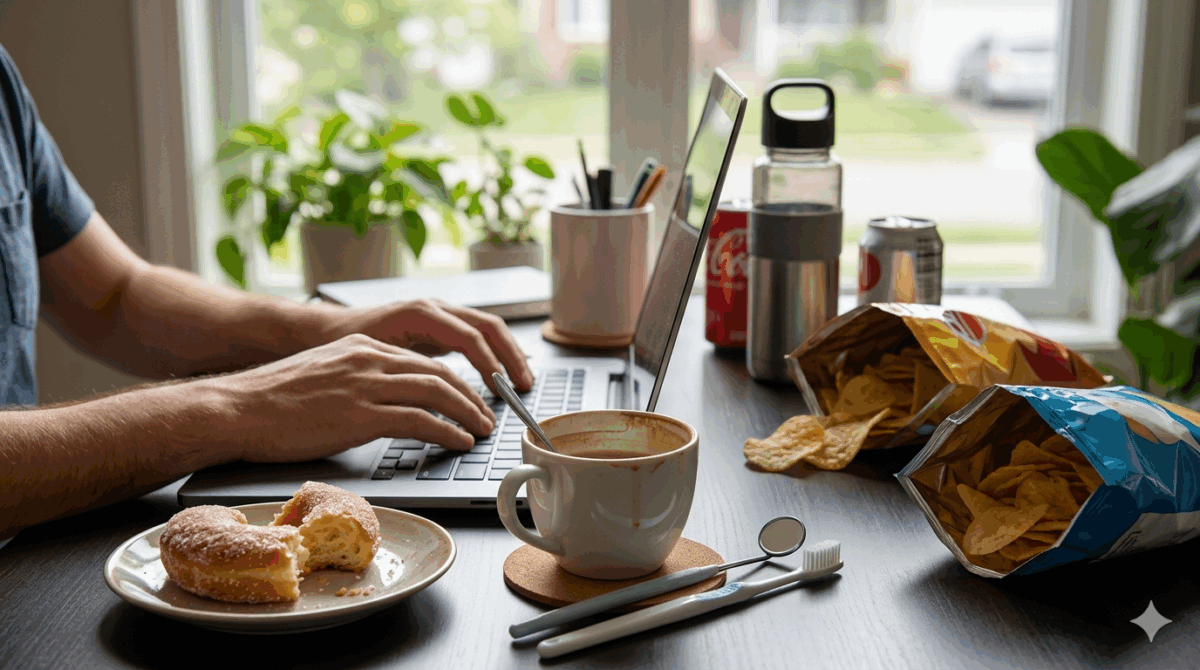
The Work-From-Home Habit That’s Destroying Teeth

Working from home has changed everything—our schedules, our routines, even how we eat and drink throughout the day. While remote work has its benefits, dentists are noticing a surprising side effect that many people don’t connect to their dental health.

There’s one work-from-home habit that is quietly damaging teeth more than ever:

Constant snacking and sipping throughout the day.

It seems harmless—coffee on your desk, a mid-morning snack, a quick soda or juice break, a few bites while answering emails. But this daily routine is creating the perfect environment for cavities, enamel erosion, and gum disease.

Let’s break down why this habit is so harmful and what you can do to protect your smile while working from home.

The Hidden Dental Danger of “All-Day Eating”

When you’re in an office, you often have a structured eating routine—breakfast, lunch, maybe a snack. But at home, the kitchen is always nearby. That leads to frequent grazing: small snacks, repeated coffee refills, and sugary drinks consumed slowly throughout the day.

The problem is not just the food itself—it’s the frequency.

Every time you eat or drink something (other than water), your mouth experiences an acid attack.

Bacteria in your mouth feed on sugars and carbs and produce acid that weakens enamel. This acid attack lasts around 20–30 minutes each time. If you snack repeatedly, your teeth are under constant attack all day long.

That means your enamel never gets a chance to recover.

Why Coffee and “Healthy Drinks” Are a Big Problem

Many work-from-home professionals rely on drinks to stay productive, such as:

  • coffee with sugar or flavored creamers
  • tea with honey
  • energy drinks
  • soda
  • fruit juices
  • flavored sparkling water
  • smoothies

Even drinks that seem healthy can contain natural sugars and acids that wear down enamel.

The biggest issue is sipping slowly for hours during meetings or while working. A single cup of sweetened coffee can take an hour to finish, exposing your teeth to sugar and acidity the entire time.

Snacking Culture: The New Normal

Working from home often creates a habit of “reward snacking” or eating out of boredom. Common snacks include:

  • chips and crackers
  • cookies
  • granola bars
  • dried fruits
  • flavored yogurt
  • candy
  • popcorn
  • sweetened protein bars

These foods stick to teeth and break down into sugars quickly. Even crackers and chips, which don’t taste sweet, convert into sugar in the mouth and feed cavity-causing bacteria.

The Real Issue: Less Saliva and More Dry Mouth

Another work-from-home problem is dehydration. People often drink less water and rely more on caffeine. Long hours in air-conditioned rooms also dry out the mouth.

When your mouth is dry, you produce less saliva. And saliva is critical because it:

  • washes away food particles
  • neutralizes acids
  • protects enamel
  • prevents bad breath
  • reduces bacteria buildup

Less saliva = higher risk of cavities and gum problems.

Dry mouth plus constant snacking is a perfect recipe for tooth decay.

Work-From-Home Stress Is Causing Teeth Grinding

Remote work also increases stress levels, which has led to a rise in teeth grinding (bruxism).

Many people clench their jaws during meetings, deadlines, and long screen time without noticing. Over time, grinding can cause:

  • cracked teeth
  • jaw pain
  • headaches
  • worn-down enamel
  • tooth sensitivity
  • TMJ problems

Dentists are seeing more cracked molars and worn teeth in work-from-home patients than ever before.

Why This Habit Leads to More Cavities

Even if you brush twice a day, frequent snacking still increases the risk of cavities because plaque bacteria have a constant food supply.

This leads to:

  • more acid production
  • weakened enamel
  • faster cavity formation
  • decay near the gumline
  • increased tooth sensitivity

Some people are shocked to hear they have multiple cavities even though they “eat healthy.” The real culprit is usually frequent eating and sipping, not just sugar.

Signs Your Work-From-Home Routine Is Damaging Your Teeth

You may be experiencing early dental damage if you notice:

  • increased tooth sensitivity
  • frequent bad breath
  • yellowing teeth
  • jaw soreness or tightness
  • headaches near the temples
  • bleeding gums
  • cavities showing up more often
  • enamel chips or cracks

If these symptoms are appearing, your daily routine may be affecting your oral health more than you think.

How to Protect Your Teeth While Working From Home

You don’t need to stop enjoying snacks or coffee—but you do need to change the pattern.

  1. Stop Sipping All Day

Try to drink your coffee or tea in one sitting rather than stretching it over hours.

  1. Switch to Water Between Drinks

After coffee or juice, drink water to rinse away acids.

  1. Create a Snack Schedule

Instead of grazing all day, set a specific snack time. Fewer eating moments means fewer acid attacks.

  1. Choose Tooth-Friendly Snacks

Better snack options include:

  • cheese
  • nuts
  • eggs
  • fresh vegetables
  • plain yogurt
  • apples (in moderation)

These are less sticky and support oral health.

  1. Chew Sugar-Free Gum

Sugar-free gum with xylitol stimulates saliva and helps reduce bacteria.

  1. Brush and Floss More Intentionally

Brushing twice daily is important, but flossing is often what people skip. Flossing removes plaque between teeth where cavities frequently begin.

  1. Consider a Night Guard if You Grind

If you wake up with jaw pain or headaches, you may need a custom night guard to protect your teeth.

Don’t Skip Dental Cleanings

With work-from-home habits increasing plaque buildup and cavities, professional cleanings are more important than ever. Your dentist can spot early damage before it becomes expensive treatment.

Routine cleanings help prevent:

  • cavities
  • gum disease
  • enamel erosion

Work-from-home life may feel easier, but your teeth may be paying the price. The habit of constant snacking, sipping coffee all day, and staying dehydrated is silently destroying enamel and increasing cavities.

The solution isn’t extreme—it’s simple awareness and small routine changes. By drinking more water, limiting grazing, and keeping up with dental checkups, you can protect your teeth while still enjoying the flexibility of remote work.

Because your productivity shouldn’t come at the cost of your smile.
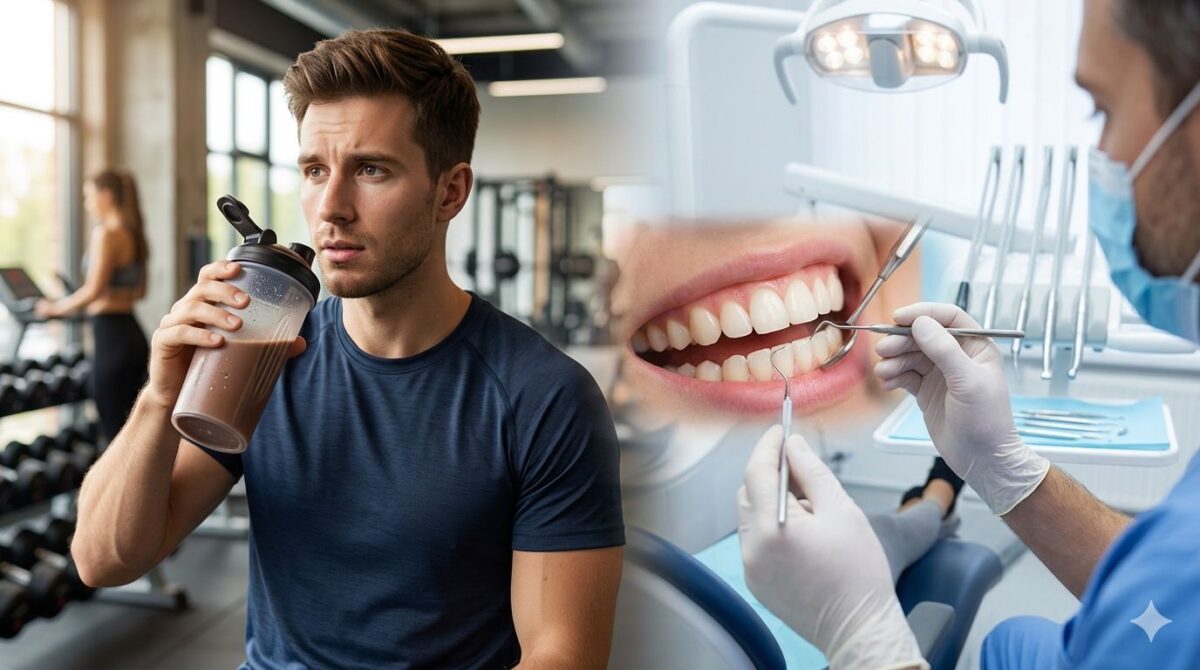
Protein Shakes and Teeth: What Nobody Talks About

Protein shakes have become a daily habit for millions of people. Whether you’re trying to build muscle, lose weight, recover after workouts, or simply hit your nutrition goals, protein supplements are now considered a “healthy lifestyle essential.”

But while most people focus on the benefits for fitness and body composition, there’s one topic almost nobody discusses: what protein shakes can do to your teeth.

Yes—protein shakes may be great for your muscles, but depending on what’s inside them, how often you drink them, and how you consume them, they can contribute to enamel erosion, tooth sensitivity, bad breath, and even cavities.

Let’s talk about the hidden dental effects of protein shakes and how to protect your smile while staying consistent with your fitness goals.

Are Protein Shakes Bad for Teeth?

Protein shakes themselves aren’t “bad,” but the ingredients in many popular shakes can create an environment in your mouth that increases dental risk.

Many store-bought or flavored protein shakes contain:

  • added sugars
  • artificial sweeteners
  • acidic flavoring agents
  • preservatives
  • dairy-based ingredients that stick to teeth

When consumed frequently, these can increase plaque buildup and weaken tooth enamel over time.

So it’s not protein that harms teeth—it’s what comes with it.

The Hidden Sugar Problem in Protein Shakes

A major concern is sugar.

Many protein shakes marketed as “healthy” still contain high levels of sugar or hidden carbohydrates. Even shakes labeled “low-fat” or “meal replacement” can have sweeteners that feed bacteria in your mouth.

When bacteria consume sugar, they produce acid. That acid attacks your enamel and increases the risk of cavities.

Even if your protein shake contains natural sweeteners like honey, dates, or fruit blends, it can still cause the same effect if it’s consumed regularly.

Frequent sipping = constant acid exposure.

That’s where the real damage begins.

Protein Shakes Can Be Surprisingly Acidic

Here’s something most people don’t realize: many protein shakes are acidic.

Common shake ingredients like:

  • chocolate flavoring
  • citric acid
  • coffee blends
  • berry-based flavors
  • artificial flavor enhancers

can lower the pH of the drink. Acidic drinks soften tooth enamel, making it easier for enamel to wear away.

Over time, this can lead to:

  • tooth sensitivity
  • enamel erosion
  • yellow-looking teeth (due to enamel thinning)
  • higher risk of cavities

If you drink protein shakes daily, especially pre-workout or post-workout, your teeth may be exposed to acidity more often than you think.

The “Sipping Habit” Is the Biggest Dental Issue

Many people don’t drink protein shakes quickly—they sip them slowly throughout the day while working, driving, or during workouts.

This is one of the worst habits for your teeth.

Every sip coats your teeth with sugars and acids. Your saliva needs time to neutralize the mouth and restore balance. But when you sip continuously, your mouth stays in an acidic state for hours.

That means your enamel is under attack for longer periods, increasing your risk of:

  • cavities
  • plaque buildup
  • gum inflammation
  • tooth erosion

Even a healthy shake can become harmful if you consume it slowly over time.

Protein Shakes and Bad Breath (Yes, It’s a Thing)

Another issue many gym-goers experience is bad breath.

Protein shakes, especially whey-based shakes, can leave a residue on the tongue and teeth. When protein particles stay in the mouth, bacteria break them down and create unpleasant odor.

Also, high-protein diets can sometimes reduce carbohydrate intake, leading to ketosis-like breath (a strong, unpleasant smell).

If you notice persistent bad breath despite brushing, your protein shake routine may be contributing.

Can Protein Shakes Cause Cavities?

Yes—especially if they contain sugar, sticky ingredients, or are consumed frequently.

Cavities are caused by bacteria that feed on sugars and produce acids. If your shake has:

  • sweeteners
  • flavored syrups
  • milk sugars (lactose)
  • chocolate blends
  • energy boosters

your teeth may be exposed to cavity-causing conditions regularly.

And the worst part is many people assume protein shakes are “healthy,” so they don’t think they need to rinse or brush afterward.

What About Plant-Based Protein Shakes?

Plant-based shakes are often seen as cleaner, but they can still affect teeth.

Many plant-based shakes contain:

  • added sugars
  • oat or rice carbohydrates
  • acidic flavor blends
  • thick textures that cling to teeth

So while they may be great for digestion or allergies, they can still cause enamel wear and plaque buildup if oral hygiene isn’t maintained.

How to Protect Your Teeth If You Drink Protein Shakes Daily

The good news? You don’t need to quit protein shakes. You just need to be smart about how you consume them.

Here are dentist-recommended habits:

  1. Drink It in One Sitting

Avoid sipping slowly over 1–2 hours. Finish it in one go to reduce acid exposure time.

  1. Use a Straw

A straw reduces direct contact with your teeth, lowering enamel exposure.

  1. Rinse With Water Immediately After

Swish water in your mouth after drinking the shake. This helps wash away sugars and acids.

  1. Don’t Brush Immediately After

This is important: brushing right after an acidic drink can damage softened enamel.

Wait at least 30 minutes before brushing.

  1. Choose Low-Sugar Options

Check nutrition labels. Choose shakes with little or no added sugar.

  1. Maintain Regular Dental Cleanings

Professional cleanings remove plaque buildup and help prevent cavities caused by frequent protein shake use.

Signs Your Protein Shakes Are Affecting Your Teeth

If you drink protein shakes often, watch for these warning signs:

  • increased tooth sensitivity
  • yellowing teeth
  • frequent cavities
  • dry mouth
  • bad breath
  • sticky feeling on teeth
  • gum irritation

If you notice these symptoms, a dental checkup can help prevent further damage.

Fitness Shouldn’t Cost You Your Smile

Protein shakes are great for supporting your health goals, but your oral health matters too.

Many people unknowingly create the perfect environment for cavities and enamel erosion simply by drinking sugary or acidic shakes daily—especially when sipping slowly and skipping rinsing afterward.

Your teeth don’t care if it’s a soda or a “healthy shake.” If it’s acidic and sweet, the damage can still happen.

The solution isn’t to stop protein shakes—it’s to build better habits around them.

Book a Dental Checkup to Protect Your Teeth

If you’re on a high-protein diet or consume protein shakes daily, regular dental checkups are essential to prevent enamel damage and cavities.

Schedule your appointment today to keep your smile strong while you stay strong.